Inspiration · Art & interiors · 2026
Art trends for 2026.
What collectors are buying now.
The art people are choosing for their walls in 2026 reflects something broader — a shift away from decoration toward meaning. Here is what we are seeing, and how aerial fine art fits into each trend.

The question people ask in 2026 is no longer “does this look good?” It is “does this mean something?” The prints that sell are the ones that carry a place, a moment, a perspective that the buyer cannot get anywhere else.
Trend 01
The end of decoration.
The rise of intention.
The defining shift in 2026 interiors is the rejection of art as wallpaper. Buyers are increasingly resistant to generic prints — the mass-produced landscapes and abstract canvases that could hang in any hotel corridor in the world. What they want instead is specificity. A place they can name. A moment that actually happened.
This is partly a reaction to the abundance of AI-generated imagery — when anything can be made instantly, what becomes valuable is the thing that could not be. A photograph taken from a specific altitude above a specific coastline at a specific hour is, by definition, unrepeatable.
Collectors are paying more attention to provenance — who made it, where, and how. The story behind the image has become part of the purchase decision in a way it wasn't five years ago.
Trend 02
Large format.
One print. One wall.
The gallery wall — that arrangement of small prints in mismatched frames — has peaked. What interior designers are specifying in 2026 is one large, considered piece per wall. The logic is simple: a single 80×120 cm print commands attention in a way that a grid of nine small frames never can.
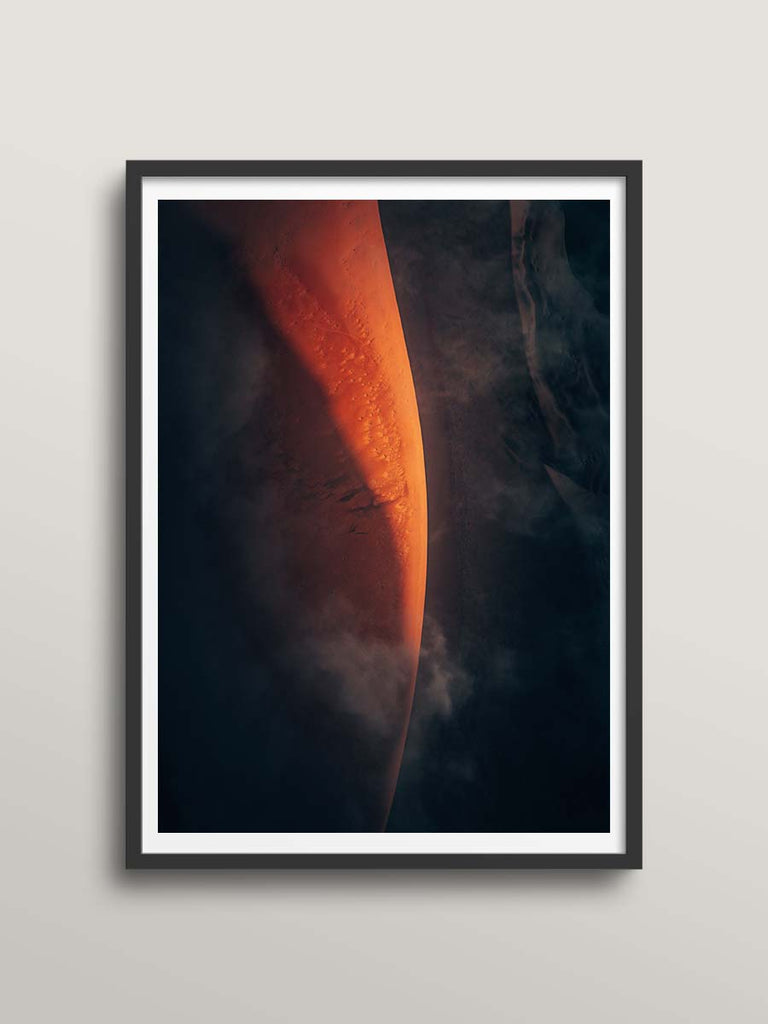
This trend plays directly to aerial photography's strengths. The detail in a large-format aerial print — the texture of volcanic sand, the individual ripple patterns in a tidal flat — only fully reveals itself at scale. At 30×40 cm you see the composition. At 80×120 cm you see everything.
The shift has also made buyers more willing to invest. If you are buying one piece for one wall, the case for spending more on the right piece becomes obvious.
Trend 03
Nature — but not
the version you know.
Nature has been a consistent theme in interior art for decades, but the version gaining traction in 2026 is more demanding than a forest path or a seascape at sunset. Buyers want nature at its most abstract — the geological, the aerial, the overhead view that removes the familiar and replaces it with something closer to pure form.
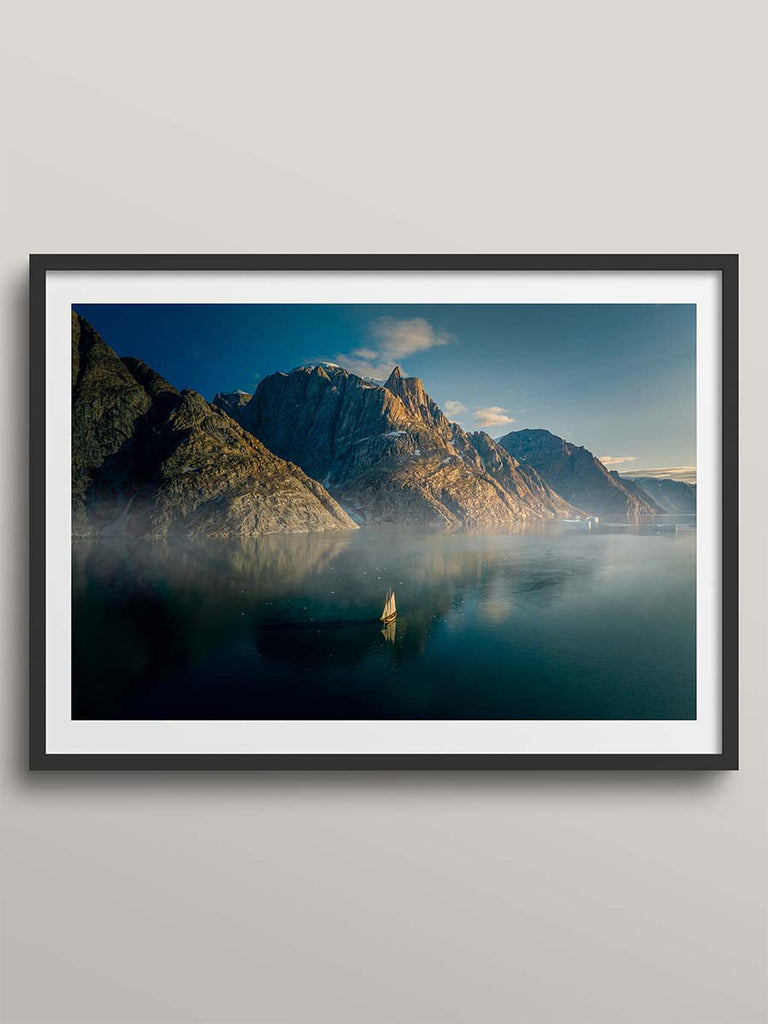
Braided glacial rivers in Iceland. Salt ponds in the Algarve. Desert erosion channels in Namibia. These are landscapes that most people have never seen from this angle and cannot easily imagine. That unfamiliarity is precisely what makes them compelling — they stop a visitor in their tracks before they even know what they are looking at.
The palette that accompanies this trend is muted and natural — terracotta, slate, sand, deep ocean blue. All of which happen to describe a significant portion of the Airpixels collection.
Trend 04
Scarcity as value.
The collector mentality goes mainstream.
Limited editions used to be the territory of serious collectors — people who bought art as investment. In 2026 that mentality has spread into the mainstream interior market. Buyers who would previously have bought a print simply because it looked good are now actively seeking pieces with edition numbers, certificates and a defined scarcity.
Part of this is the influence of the wider culture around limited releases — the same psychology that drives demand for limited sneakers or whisky bottlings has entered the art print market. A print that only exists 29 times in the world carries a weight that an unlimited open edition simply cannot match.
For collectors considering an Airpixels limited edition: once an edition closes, it does not reopen. The certificate is a permanent record. That combination — a real photograph of a real place, in a fixed number, on museum-grade paper — is exactly what the market is moving toward.
Trend 05
Scandinavian restraint
returns to the centre.
After several years of maximalism — bold colours, busy patterns, statement pieces in every corner — the interior design conversation in 2026 has shifted back toward restraint. The Scandinavian aesthetic, with its emphasis on quality materials, negative space and the idea that less communicates more, is back at the centre of how people are thinking about their homes.
This is partly driven by a broader cultural exhaustion with overstimulation. People want rooms that feel calm. They want one beautiful thing on the wall that they can live with for ten years, not a collection that needs refreshing every season.
For aerial fine art, this is native territory. The Airpixels collection was built around exactly this sensibility — quiet confidence, specific beauty, nothing unnecessary.
Trend 06
Sustainability in the
materials, not the message.
Buyers in 2026 are sceptical of sustainability as marketing. They have seen too many brands put a leaf on their logo without changing anything meaningful. What they respond to instead is sustainability demonstrated through materials and process — archival paper that lasts a lifetime rather than ending up in landfill in five years, made-to-order production that eliminates overstock, a studio that actually funds environmental projects rather than just mentioning them.
Every Airpixels print is made to order. The paper is archival — guaranteed for a lifetime. The studio contributes monthly to tree-planting and ocean conservation. None of that is on the label. It is simply how the business works.
“The prints that last in a room are the ones that carry a place and a moment the buyer cannot replicate. Not decoration — a view of somewhere real, from an angle most people will never reach.”
Tobias Hägg · Airpixels
What this means for your walls
The short version.
Buy one great thing.
Every trend in 2026 points in the same direction: fewer pieces, higher quality, more meaning. One large aerial print on a white wall — something specific, something made by a real photographer who flew to a real place — will outlast and outperform anything generic you could put in its place.
If you are looking at a limited edition, do not wait. The edition numbers are fixed. When they are gone, they are gone permanently.
Browse all prints View limited editionsThe complete collection
The world looks different
from above.
Every image captured from altitude by Tobias Hägg. Printed on museum-grade archival paper, made to order in Stockholm and shipped worldwide.
Browse all prints Meet Tobias